Case Study
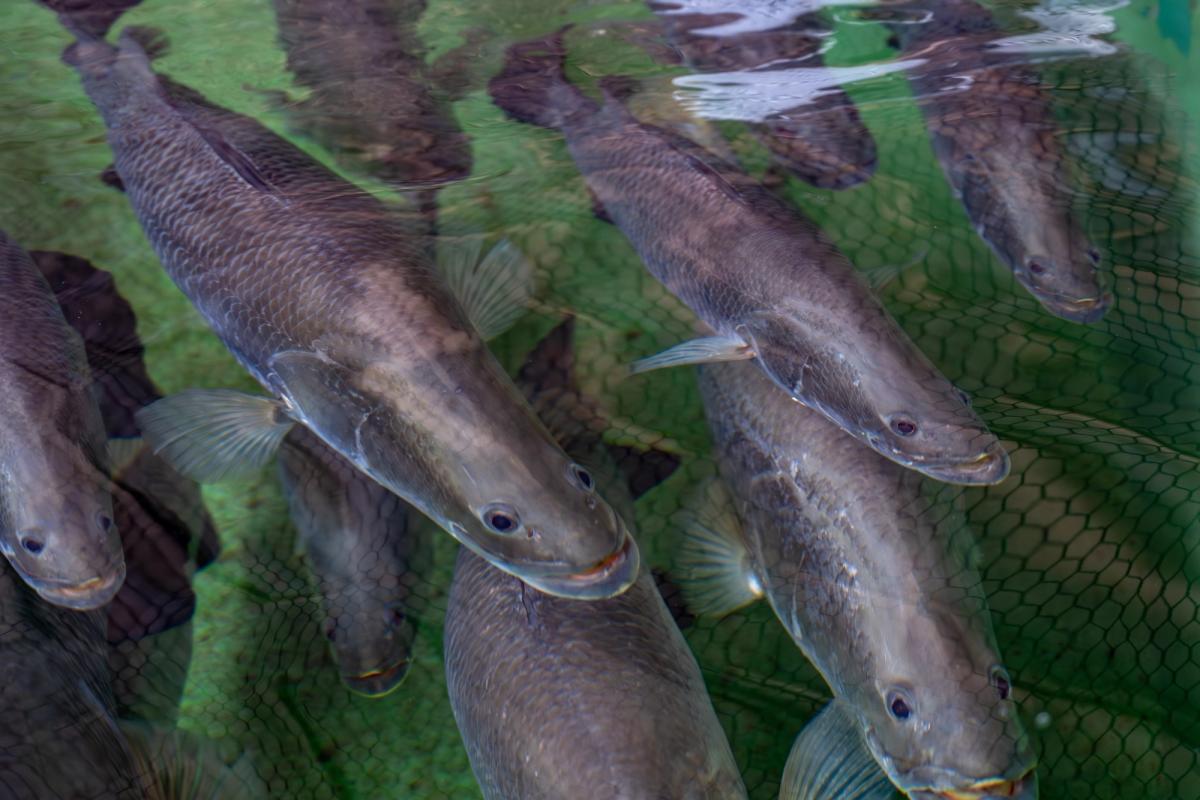
Inside Australia's largest barramundi farm, on assignment for Austrade
Behind the sunrise aerial that announced Australia's first ASC-certified barramundi farm, and what it took to document Humpty Doo Barramundi for Austrade's Nation Brand library.
One sunrise, one drone flight, one photo now telling Australia's aquaculture story.
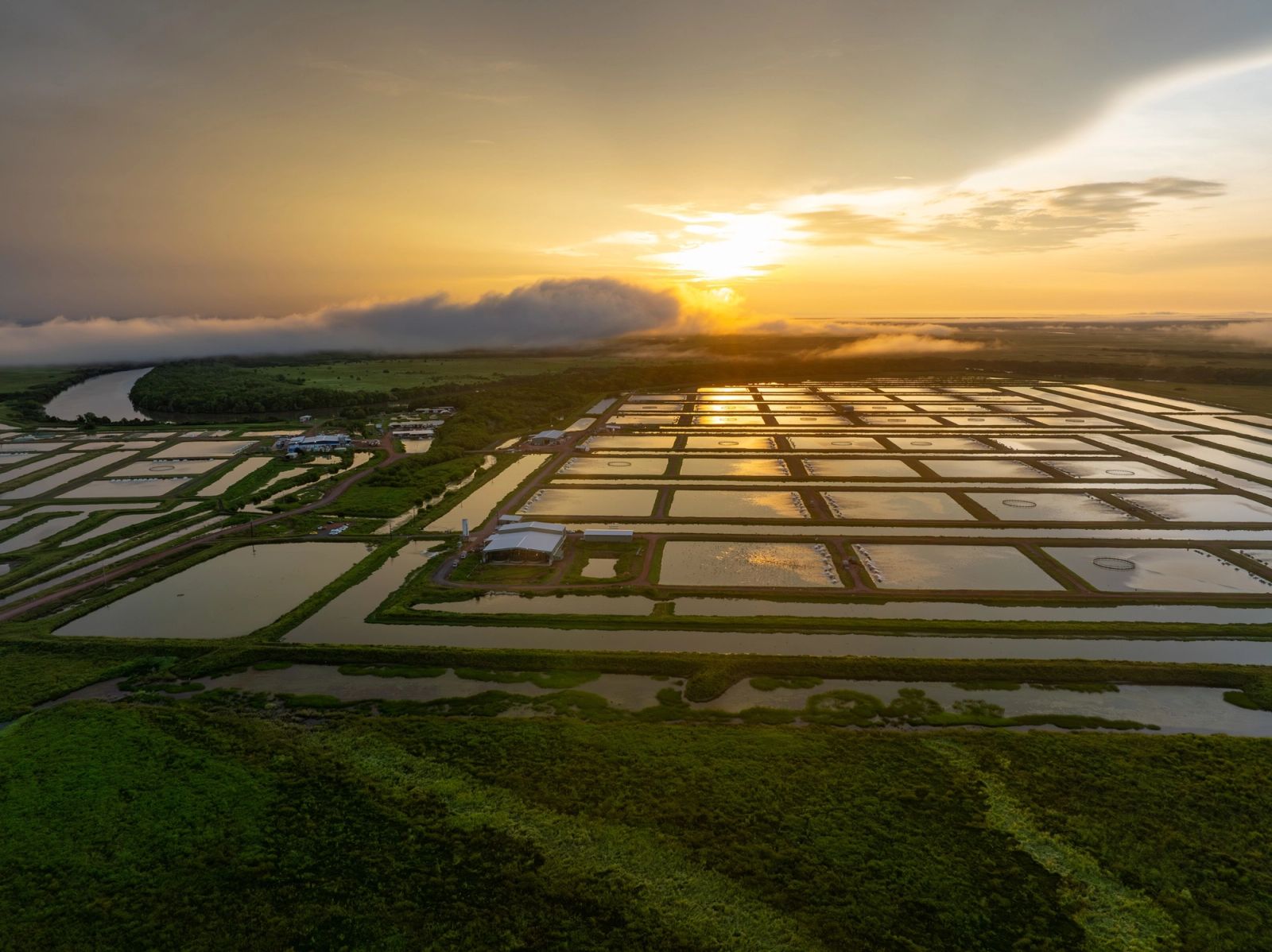
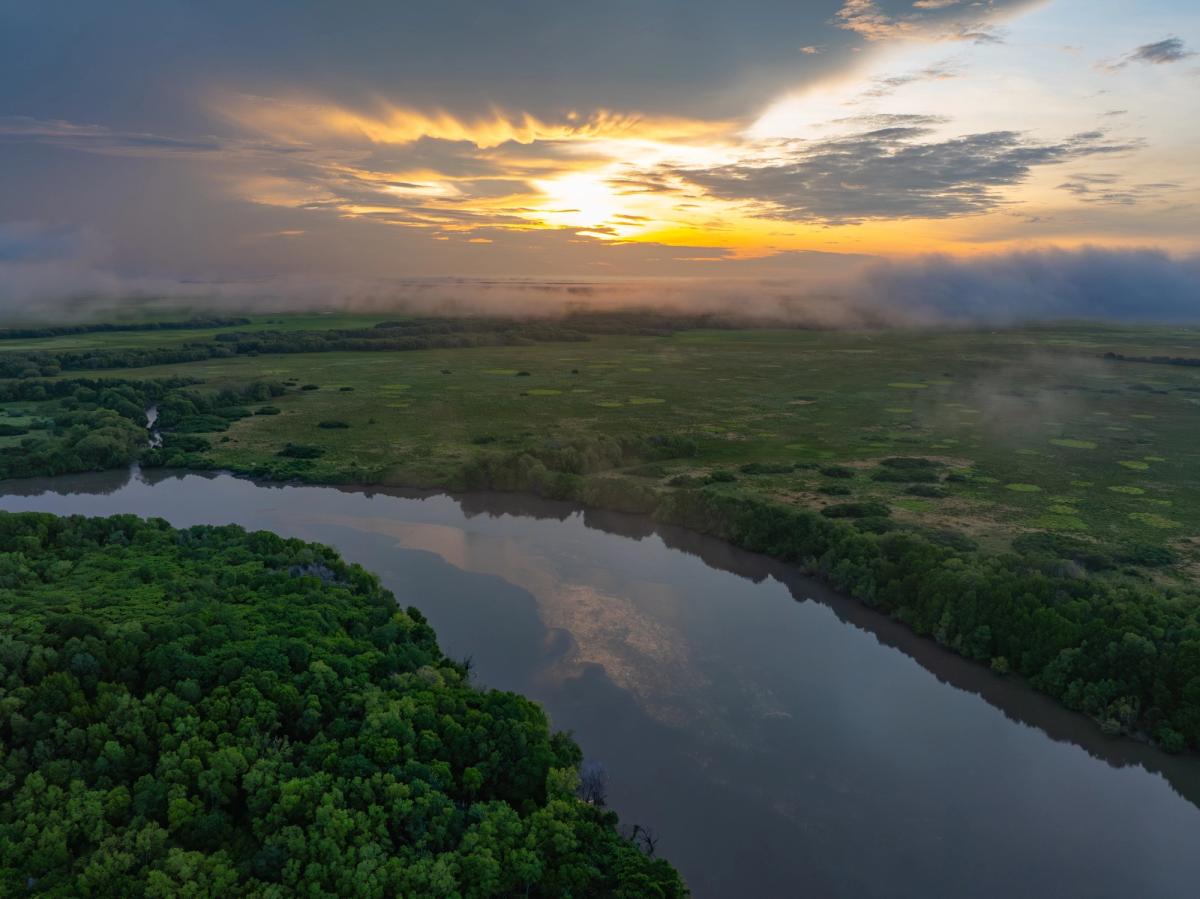
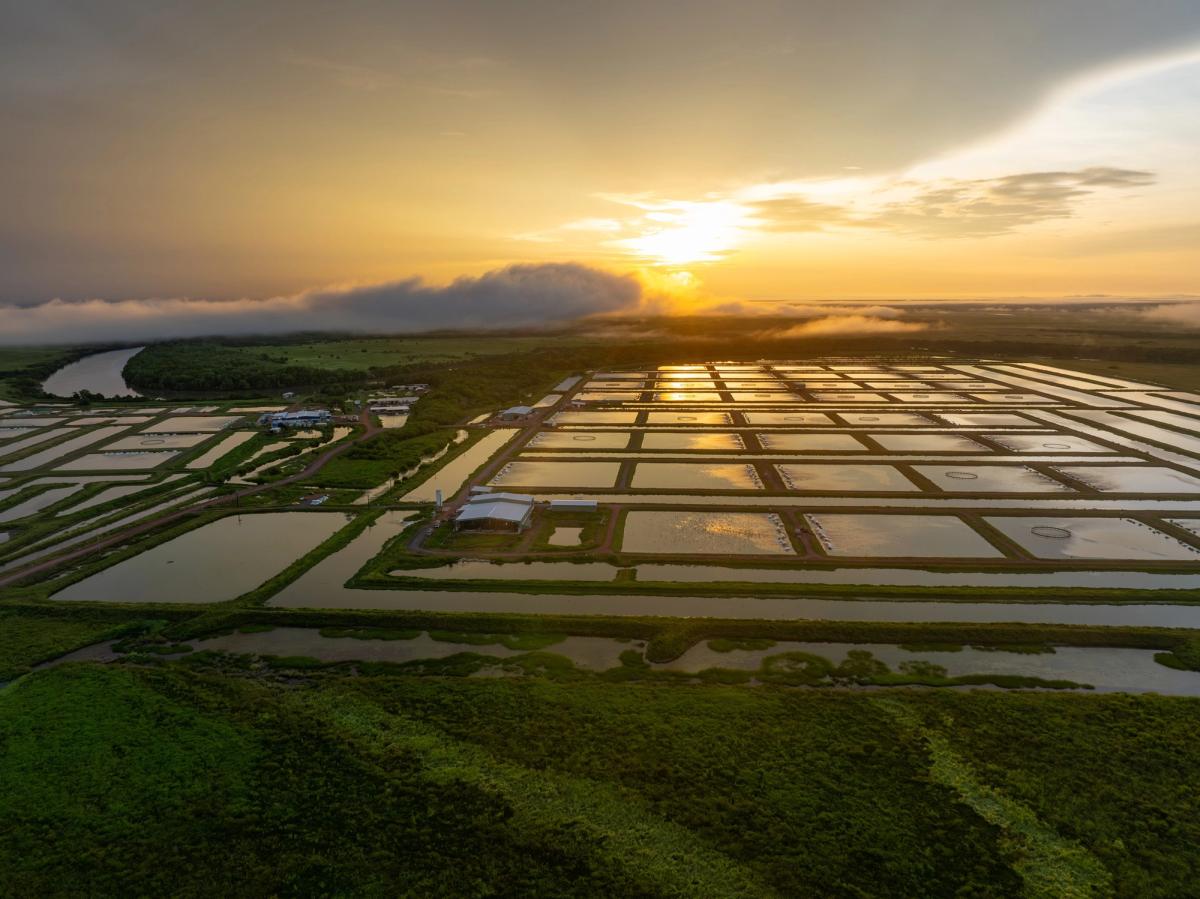
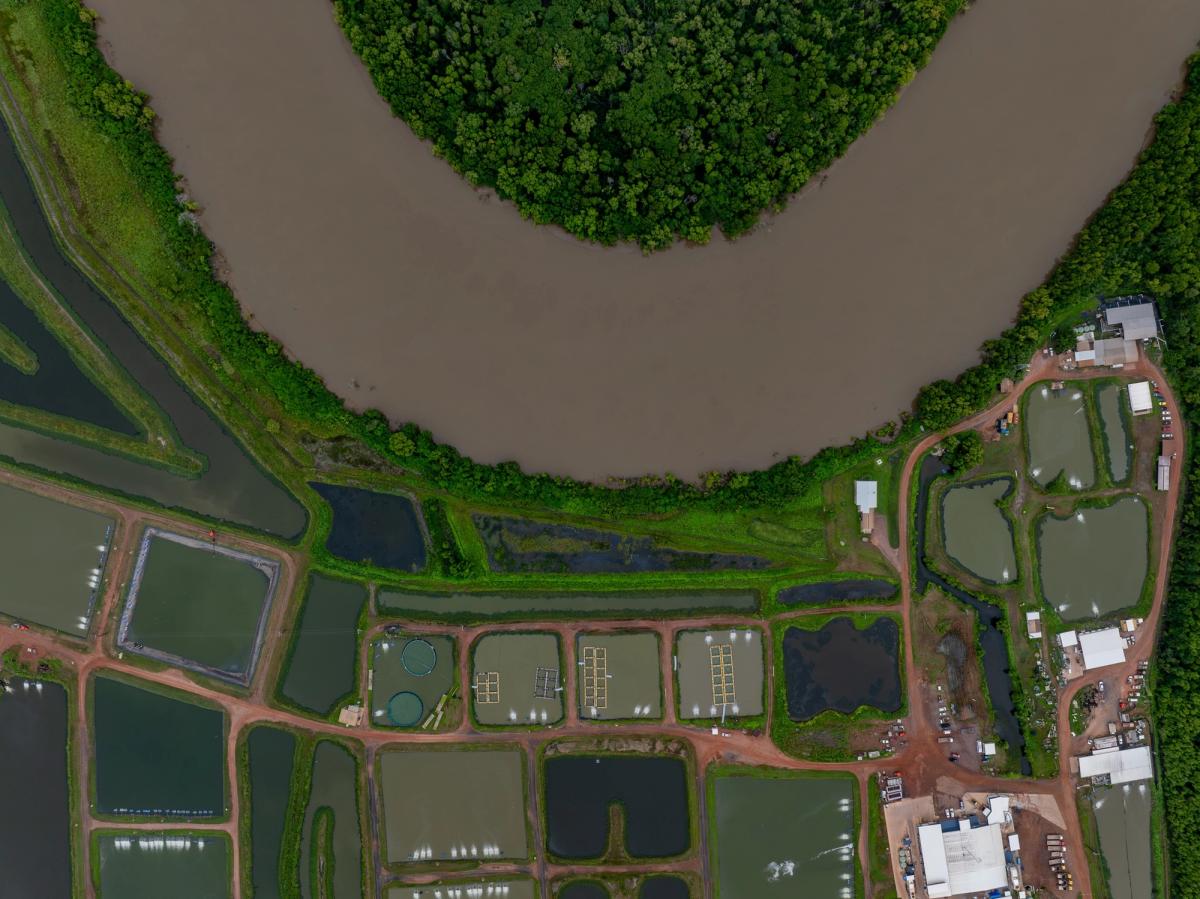
The drone lifted off at around five in the morning. Cloud was still sitting low over the wetlands. The sun hadn't properly crested the horizon yet, but there was enough light to see the shape of the farm. Twenty kilometres of saltwater channels threading through 700 hectares of Adelaide River floodplain, with the river itself curving away in the background.
Lilly and I had been standing in the dark for about fifteen minutes at that point, gear laid out, coffee not quite working yet. It was already 29 degrees and 90% humidity.
That frame, the low cloud, the reflection of the ponds, the Adelaide River in the distance, is the one ASC International used in December 2025 to announce that Humpty Doo Barramundi had become the first Australian barramundi farm to achieve ASC certification. Credited to Kess Media. Sitting on the global stage for responsibly farmed seafood.
Which is a good place to start a blog post, but it's not really the story.
The commission
Austrade brought us in to shoot for the Australian Nation Brand photo and video library. That's the asset library trade commissioners, export agencies and government communications teams around the world draw from when they're telling the story of Australian industry. Humpty Doo Barramundi was one of the businesses Austrade wanted documented properly. Australia's largest saltwater barramundi producer, 100% family-owned, on the banks of the Adelaide River halfway between Darwin and Kakadu.
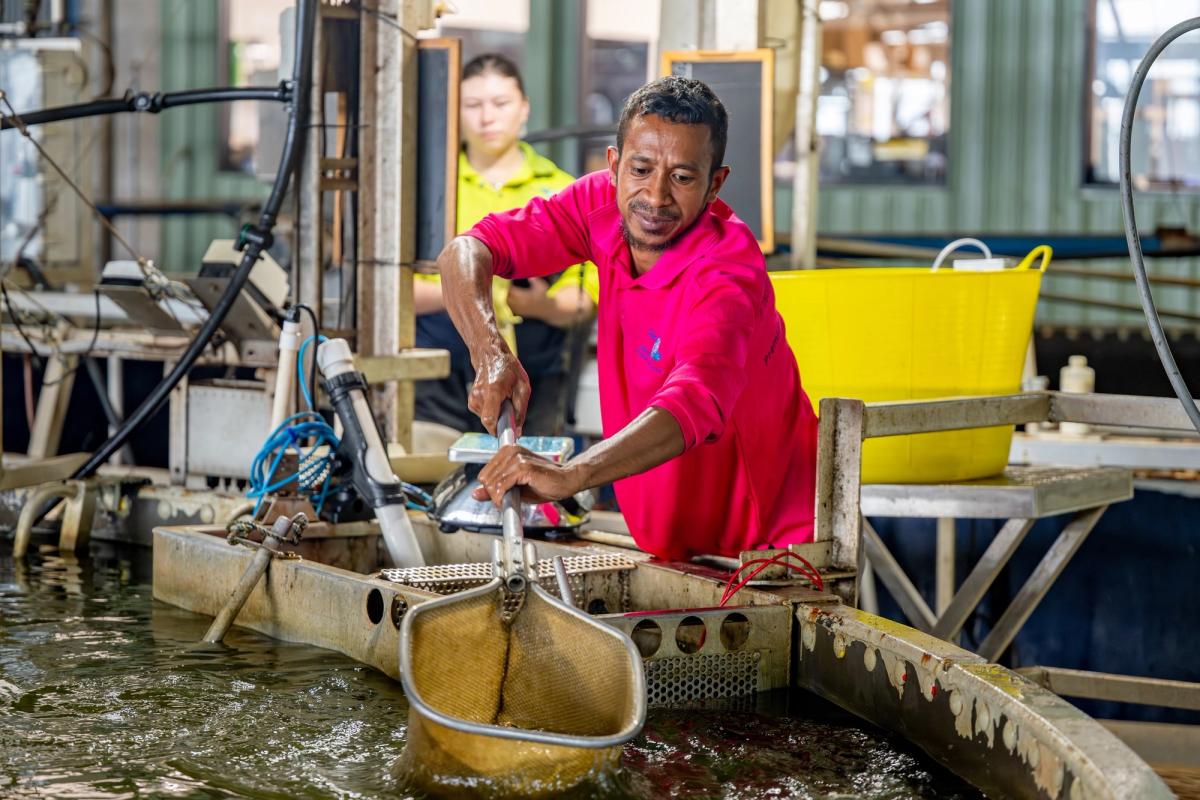
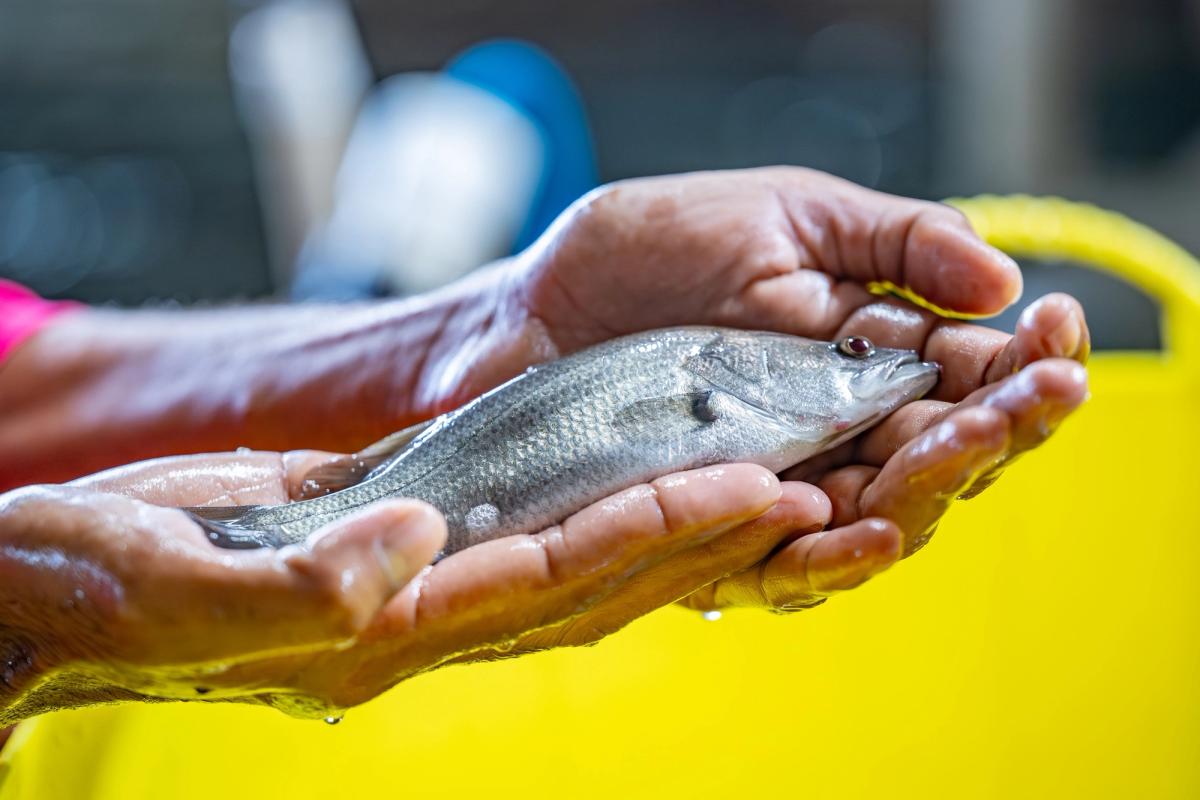
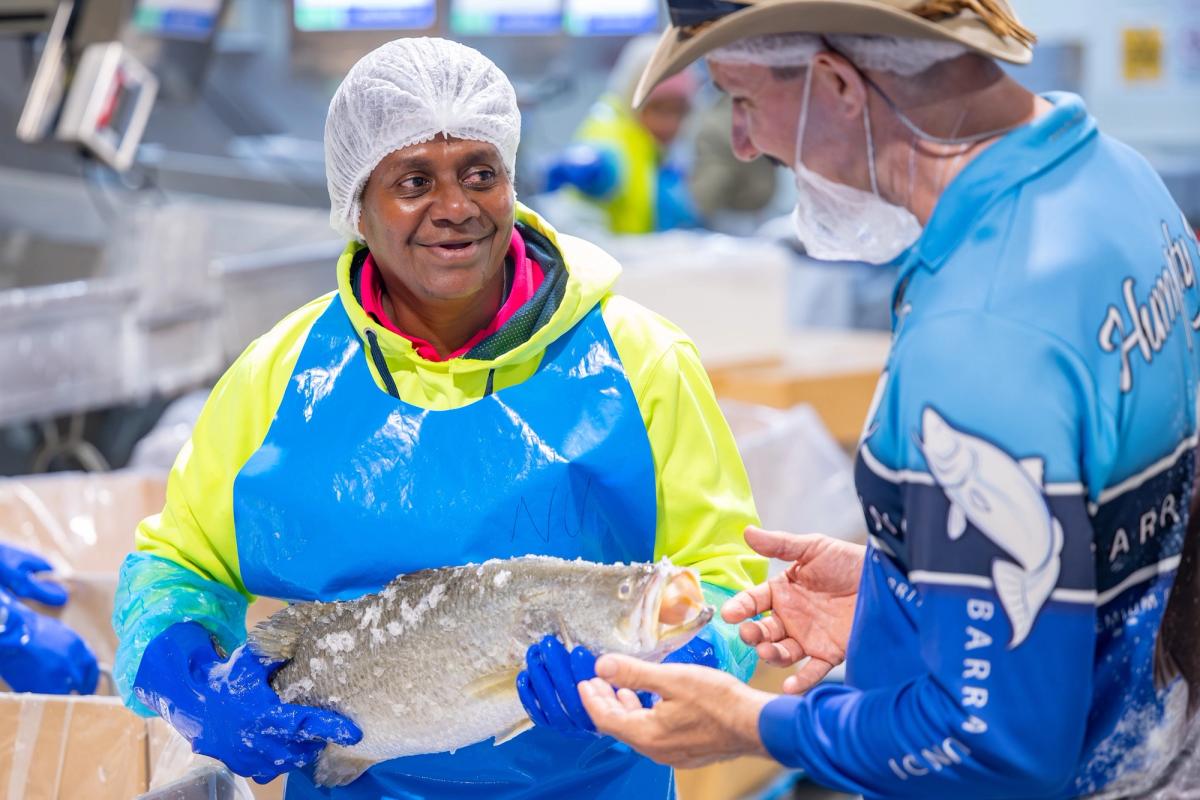
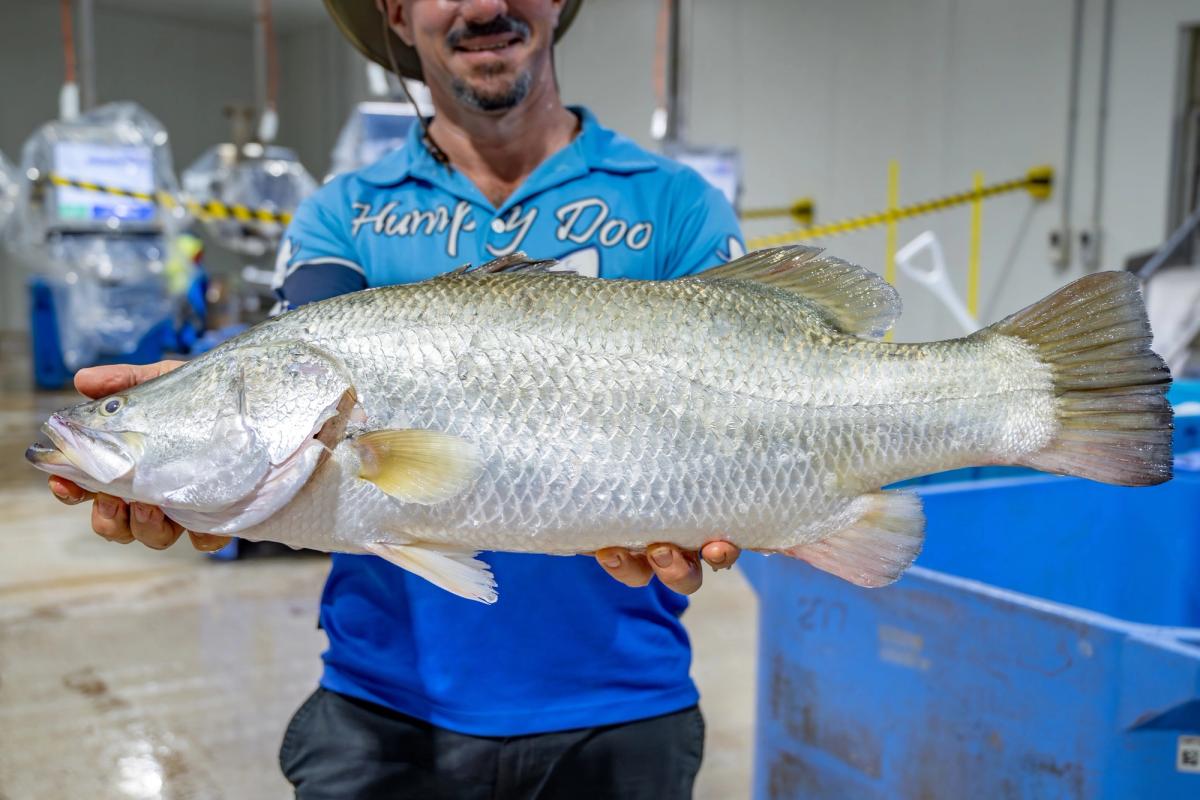
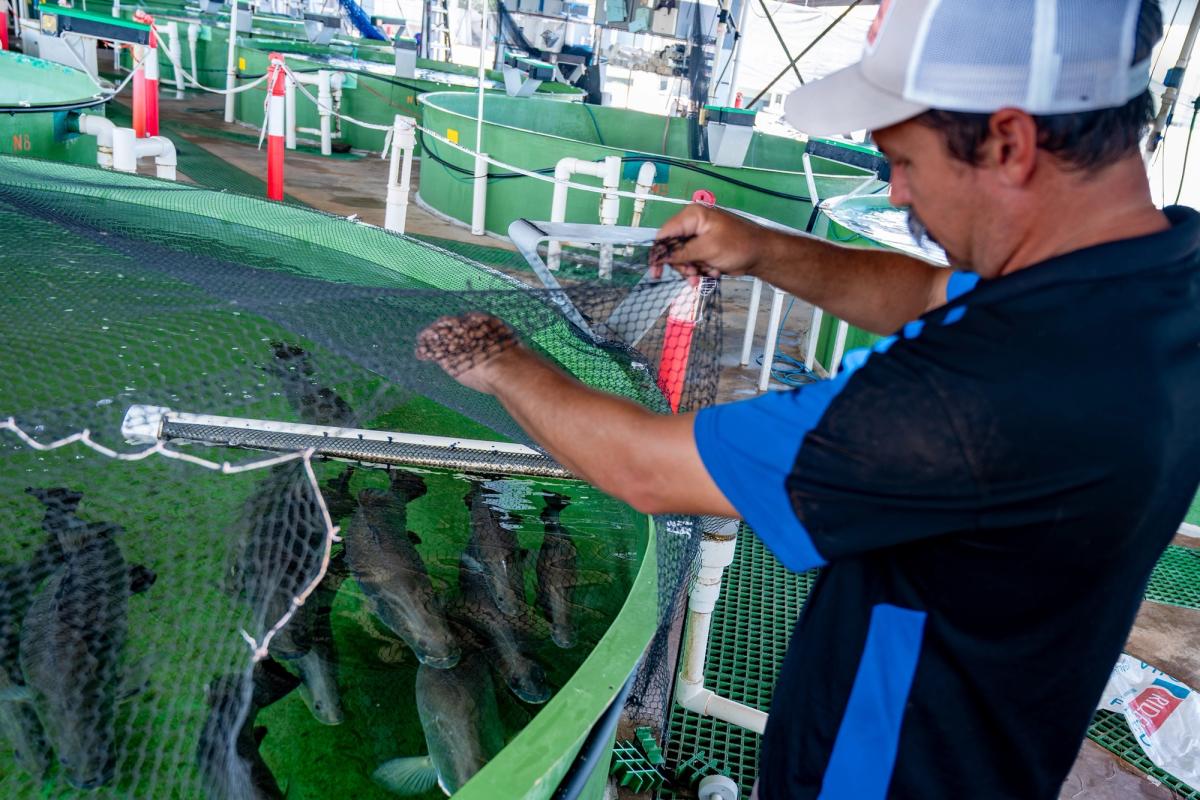
The brief was broad. Stills, aerials, and video. Every part of the operation. Feeding, harvesting, processing, logistics. Plus the research lab and hatchery on Channel Island. Enough coverage that the library's users around the world could tell the Humpty Doo story without ever running out of the right frame.
Every asset we delivered now sits in the Nation Brand Library and is available to download, for free, right here.
Getting there
You fly into Darwin, pick up a hire car, and drive. The farm is about an hour south of the city, but calling it "an hour out of Darwin" undersells it. The last stretch is proper Top End country. Flat, wet, green, empty. You turn off the highway onto a dirt track and keep driving until the track ends, and that's the farm.
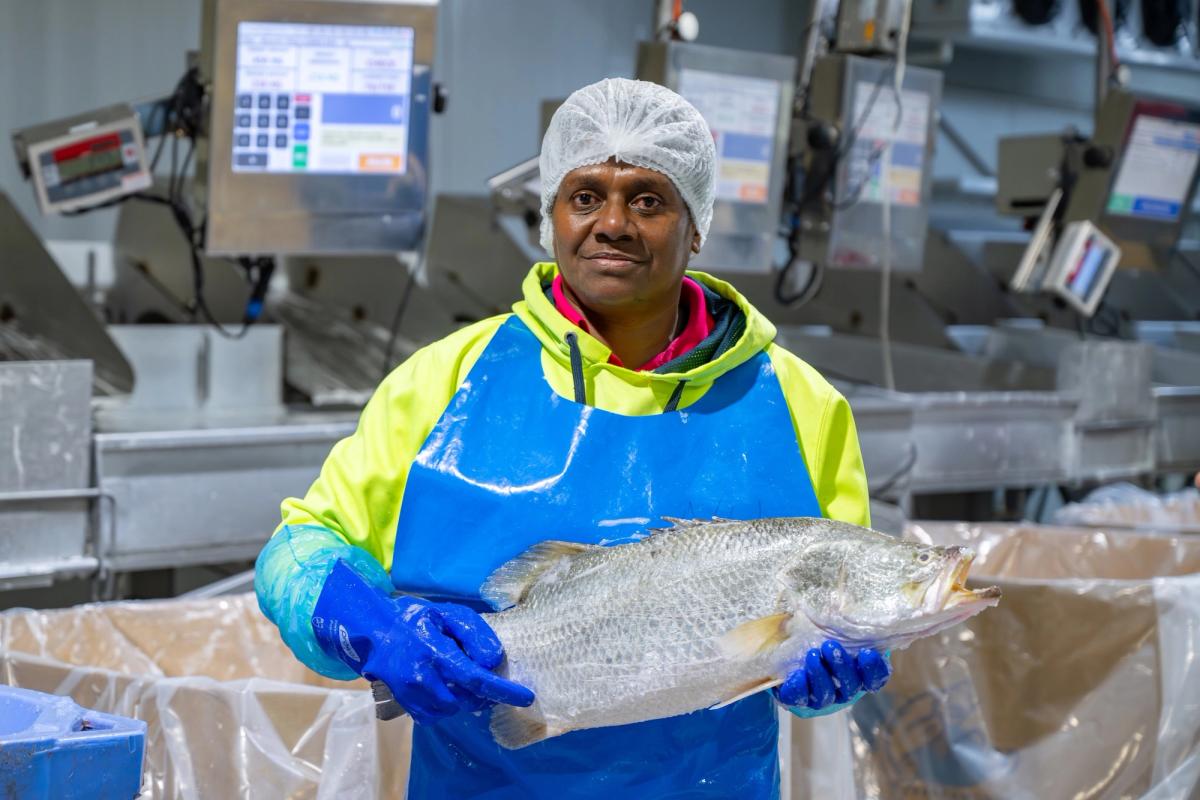
We arrived the afternoon before, walked the site with Dan Richards, the CEO, whose family has been in the Territory for five generations, and planned the next day's shoot. Dan is one of the nicest, most genuine business owners you'll meet. No theatre. No rehearsed lines. Just a man who loves his fish and his staff and wants the work to mean something.
That matters, because when the person you're shooting is genuine, the images are genuine. You can't fake the faces.
The conditions
Five a.m. was 29 degrees. By mid-morning it was 35. The humidity stayed at 90% all day.
At that temperature and humidity, gear sweats. Lenses fog the moment they come out of an air-conditioned car. You're constantly wiping down the Z9, the Z6II, the drone batteries, yourself. Lilly and I burned through water like we'd never seen water before.
The DJI Mavic 4 Pro handled the heat better than we did. Battery performance drops in tropical conditions but we'd packed enough to keep rotating, and the sunrise window meant the best aerials were in the bag before the worst of the heat arrived. The Nikon Z9 and Z6II paired well. One body on a long lens for staff portraits at distance (you don't always want to stand next to someone feeding fifteen thousand fish), one on a wider lens for the environment shots.
And then there were the crocodiles.
Every now and again, Dan mentioned casually, a crocodile will turn up in one of the grow-out ponds. You know. Mangrove country. Adelaide River. It happens. Lilly's face at that moment is a photograph I wish I'd taken.
To her credit she got on with it. The only way to do that kind of work is to trust the people who know the site, pay attention, and keep shooting. She grew a lot on this trip. Working in genuinely tough conditions, meeting people who are great at what they do, and getting the job done anyway. You don't learn that in a studio.
What we captured
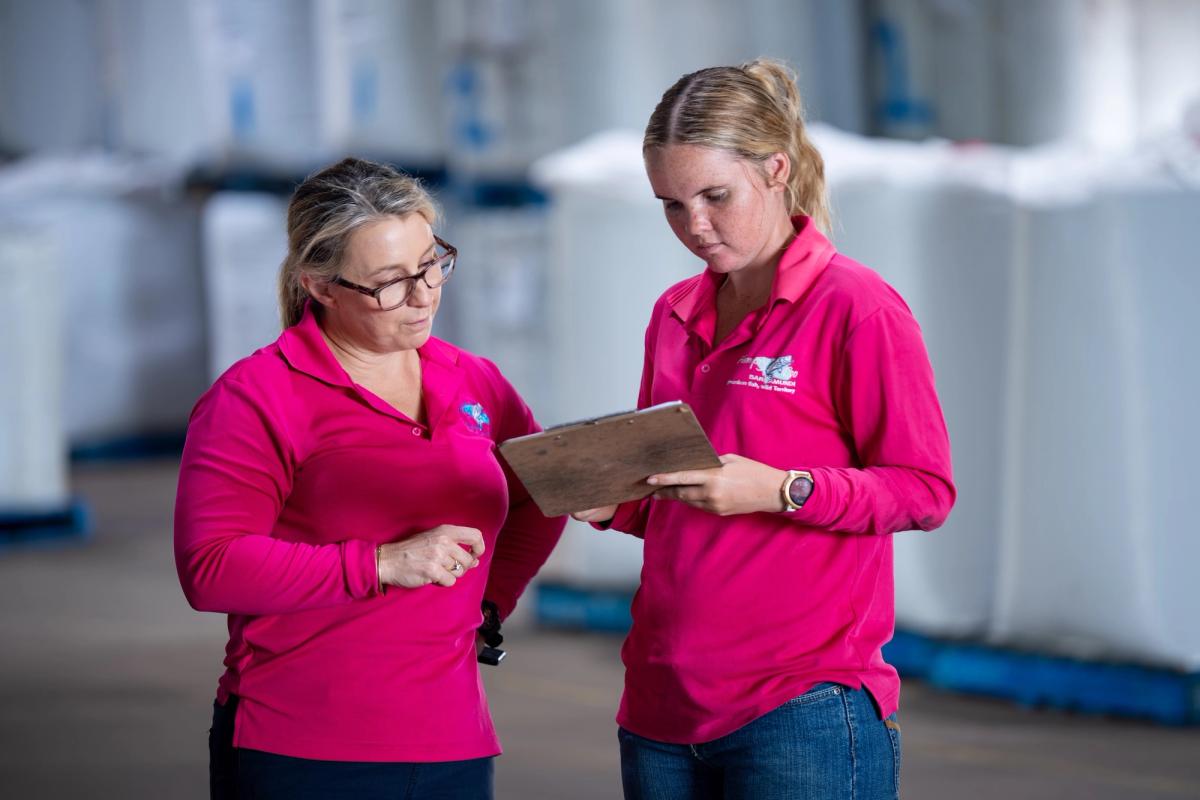
We shot from before sunrise until about four in the afternoon. Feeding. Harvest. Processing. The wetland channels from the air. Staff at work. And the thing that stays with me from the whole trip is how consistently everyone on that farm was smiling. You don't stage that across fifty people. They like being there. They believe in what they're doing.
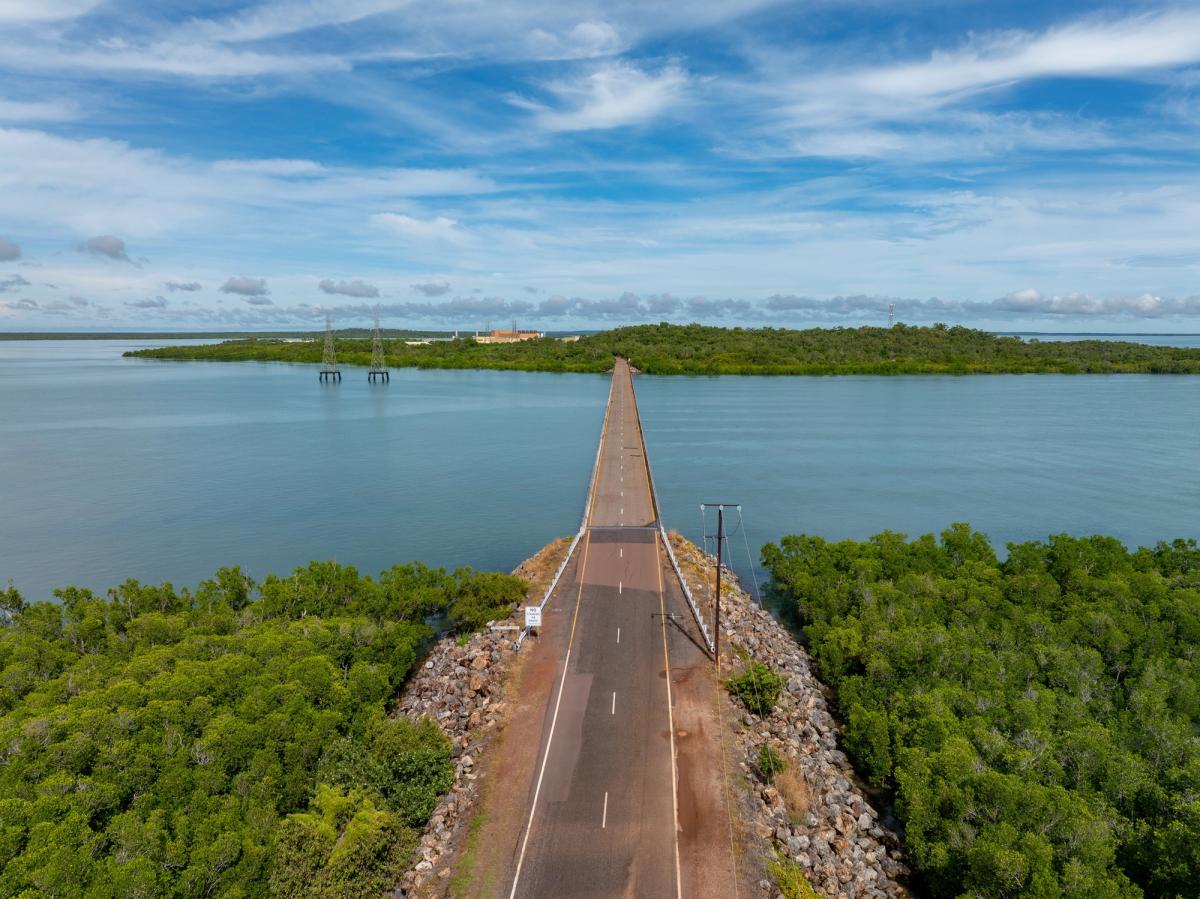
Day two we drove out to Channel Island. The road there is an experience in itself. You pass the gas-fired power station, cross a bridge over tidal mangroves, and end up at Humpty Doo's research lab and hatchery. Completely different environment from the farm. Cleaner, quieter, lab coats and tanks. We brought underwater cameras in for the hatchlings and the breeding stock, which was the first time on the trip anything felt cold to the touch.
Why this is the work we want more of
Australia has an extraordinary aquaculture story and Humpty Doo Barramundi is at the front of it. Generations of Territorians. Thirty years of pioneering. Now the country's largest saltwater barramundi producer, exporting into Asia, the Middle East and North America. And as of December 2025, the first Australian barramundi farm to meet the global ASC standard for responsible aquaculture.
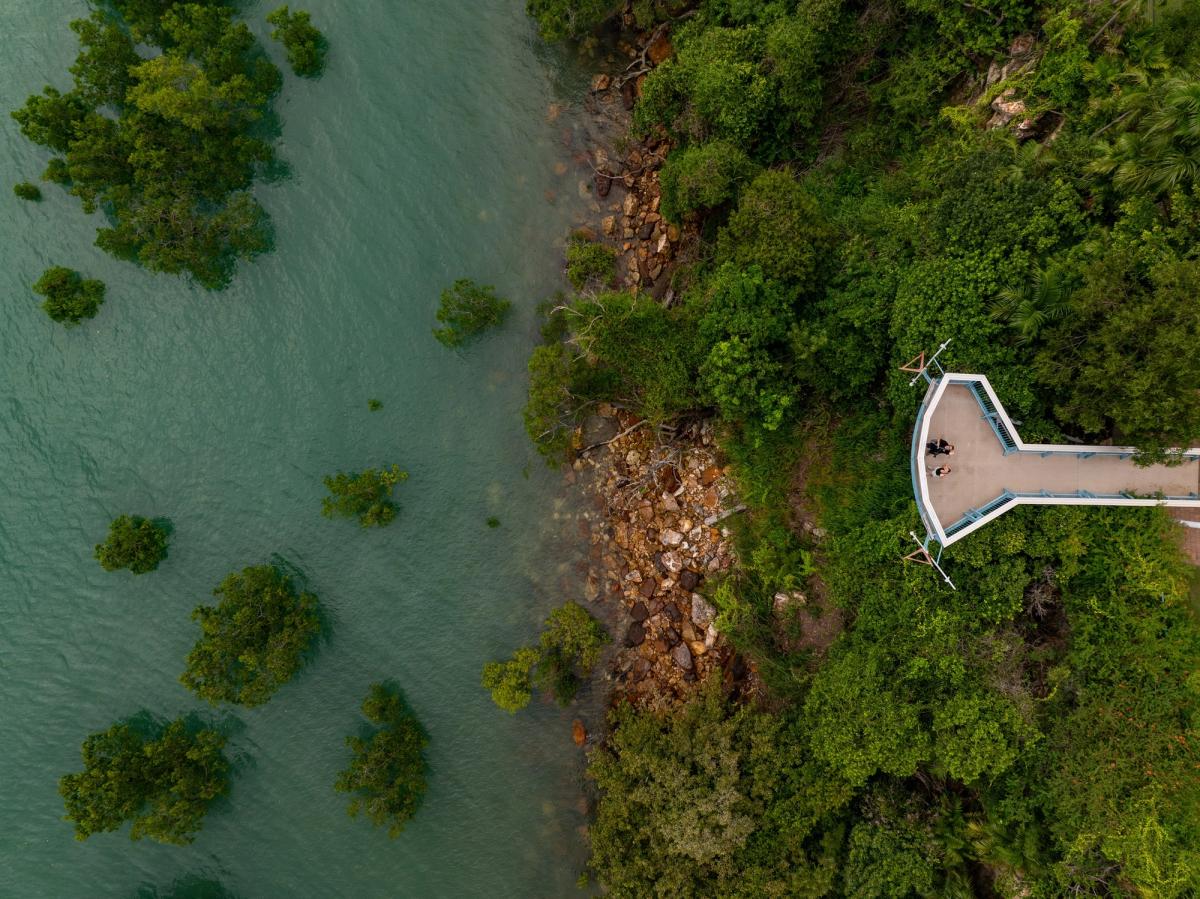
One of the things Austrade wanted documented was the way Humpty Doo works with Traditional Owners. The farm sits on Wulna and Limilngan country, and the company's Indigenous Engagement Strategy, which covers procurement, employment and training, runs through the operation rather than sitting beside it. That story matters for the Nation Brand, and it's the kind of substance that makes this work worth getting up at 4am for.
This is exactly the kind of client we want more of. Businesses doing serious, substantive work that deserves to be seen properly. Operators who let you in, trust the process, and end up with a library of assets they'll use for years. Briefs where the story matters as much as the image.
Austrade understood the brief. Dan and the Humpty Doo team opened the farm to us. We brought the gear, the eye and the willingness to get up at four a.m. in the wet season.
The sunrise aerial on ASC's announcement is the payoff everyone can see. The part you can't see, the faces of a team who love where they work, now living in a government library for anyone, anywhere, to use, is the part that actually matters.
Ready to make something worth showing?
Let's talk.
We respond within 1–2 business days.
Tell Us About Your Project →